

The Weight of Dropping 50,000
Sometimes the writing isn't good enough. It is your job to work until it is.


I interviewed thriller writer Tara Laskowski on the Simply Write w/Polly Campbell podcast this week. She said something that made me buzz with anxiety. Something I’m still thinking about.
She was writing her newest book, only a few months away from the deadline, and she knew the story wasn’t working. So she talked to her agent, tossed out 50,000 words, and started again.
Would I have the courage to do that?
Tossing the Words
The thought of throwing out all those words makes me jittery like I’ve had 17 cups of coffee. But sending out a manuscript that isn’t working, one that you know isn’t good, feels even worse.
Tara said she shed a lot of tears. Struggled with the work for weeks before ultimately deciding to start again. Her book The Weekend Retreat is in stores now.
The Writer’s Work
Clarity should always be our number one priority when writing anything. This morning I was frustrated with myself when I went looking for a project note in my journal and couldn’t even understand what I was trying to say. I felt it again when reading through the muddled first draft of this newsletter.
No matter what we write, we want it to be understood. Clarity doesn’t always come at the beginning. It can take some “throat-clearing” or venting on the page before we understand the story and what we are trying to say.
My first drafts are usually disparate, chaotic, cluttered. But by writing it all out, I become clearer about what I do want to say. And how I want to say it. Then I write and revise until the piece gets there.
Drop the Ego It Makes the Writing Worse
You’ve got to let go of your ego here, especially if you want to pitch editors and publish your work.
Good writing requires consistent effort over time.
It requires courage.
Practice.
Revision, and more revision.
You must be open to feedback, and strong enough to weather it. Challenge self-doubt and criticism.
And then, after all of that, we’ve got to sit down and write again.
Our job—a writer’s job—is to tell a story. To inform, entertain, encourage, uplift.
Our service is to the story and the readers who will spend time with it.
We can love the language, the rhythm of the words, and the pacing that makes our hearts beat faster, but those and other writing techniques aren’t for our entertainment. They are tools to make the story better.
We cannot get in the way of that.
—p
Workshop: Reported Essay Writing Workshop with Amy Paturel
Dates: Fridays, April 19 and April 26, 2024
10 a.m. to 1 p.m. Pacific.
Cost: $299
The class will include an analysis of essays and how they work, a discussion of essay ideas and possibilities, and information on pitching your essay. Students can also have their pitches workshopped in a supportive environment.
I’ve taken one of Amy’s classes and got a lot out of it. The information is practical and useful, the feedback invaluable, and Amy is so generous with her insight and expertise. I learned a lot.
Amy is an award-winning essayist and career writer, whose work has appeared in The New York Times, The Washington Post, Good Housekeeping, Wired, The Los Angeles Times, and other publications.
Amy opens this class to only six students. If you’d like to be among them, please send a sample of your published or unpublished work to reserve your place.
You can reach her at amy@amypaturel.com or register here: https://www.amypaturel.com/classes/
What’s in the Desk?
On Simply, Write w/Polly Campbell, we discuss the writing craft and the crafting of a writer’s life, but we also geek out on our favorite fonts and pens, trinkets, and the tools writers like to have around when they write.
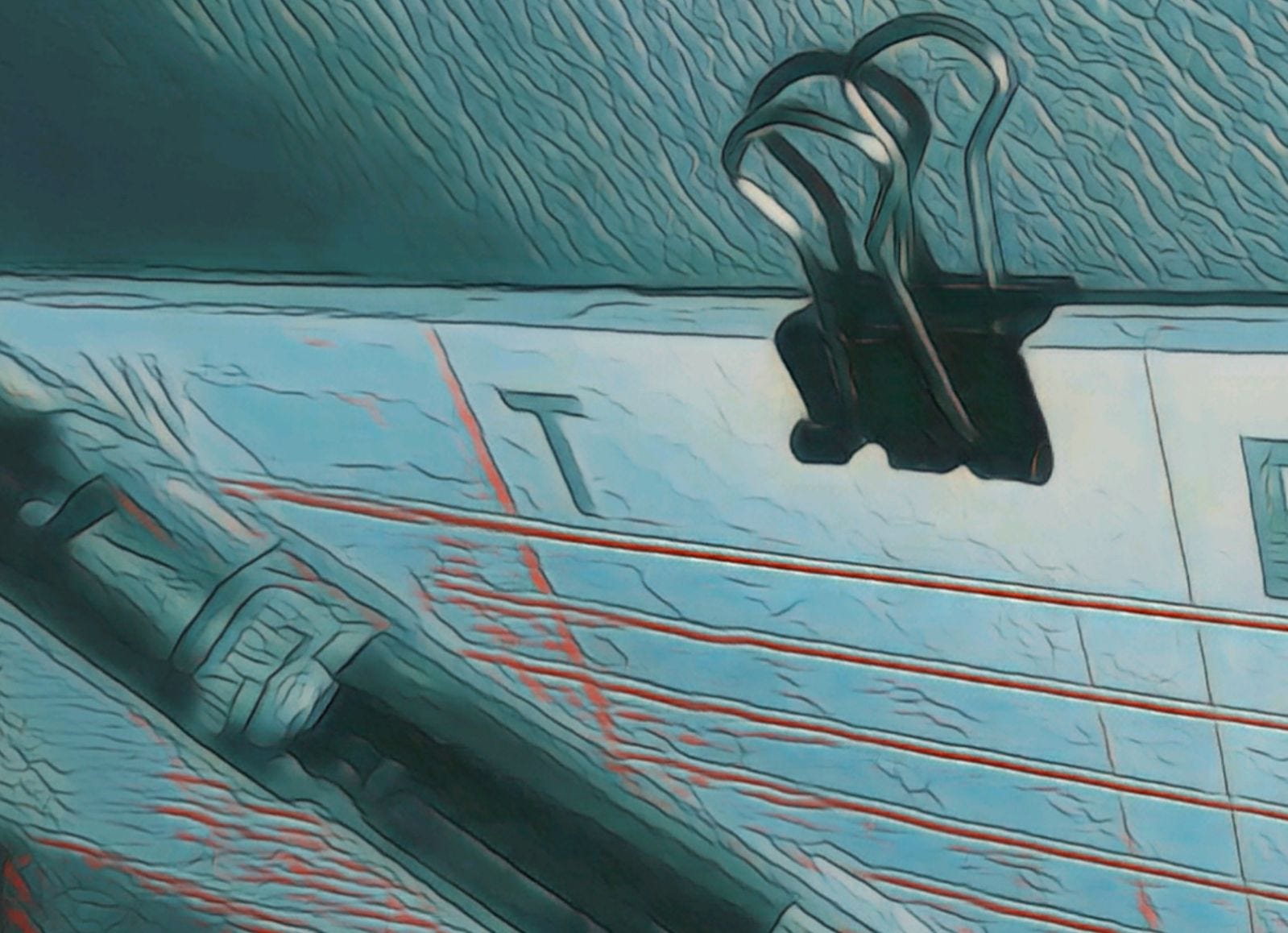
So, what’s in my desk today?
Small Binder Clip. This little metal clip is cute, sure, but it also serves as a good bookmark and I use it to attach notes onto pages of my notebook or calendar and keep the piles of sticky notes and index cards contained.
What’s in your desk—or on your desk? What do you like to have around when you write? Drop me a comment or shoot me a pic, and I will include it in an upcoming newsletter.

Writing is easy. All you have to do is cross out all the wrong words.
—Mark Twain
Sometimes you've got to let them go...for the sake of the story. And, I've been walking around saying "I hite wiste" now. :)
50,000 words? Gone? I hope she saved some of it to use somewhere, but then I hate waste. Or as my British husband says, I Hite Wiste. Difficult words of wisdom, Polly.
Jeanne Anne