Go Write Something.
My husband was frustrated with my chippy tone so he gave me an order, and this time I listened.


Days before my daughter headed back to school I snapped.
The month had been full of work deadlines, and weekend trips, school shopping, and house repairs. My work was centered more around the administrative-bill-paying-marketing responsibilities of running a writing business than the writing itself. Our bathroom was also being repaired and remodeled so we had contractors in and out. I felt depleted. And edgy. Life was moving too fast.
I was irritable. Seriously, can anyone else in this house wipe down the kitchen counter or do I have to do everything?
“Go write something,” my husband told me one night after I complained.
Go write something.
The Writing is the Payoff
In this writing business, there are so many roles to fill that sometimes I feel removed from the thing I want to do the most. While I was getting out commissioned work and producing the podcast, I had gone weeks without working on my novel, without finishing my book concept for another project.
I didn’t notice at the time, it seems I never do in the moment, how unsettled that left me. I was working but not doing the work that drives everything else. The work that drives me, helps me make sense of the world and my experience.
Go write something, he said.
And I did.
The next day I wrote an essay. I don’t know if it will ever be published. I don’t know if I’ll ever show it to anyone. But writing it made all the difference.
For the first time in months, I wrote something because I was driven to write it. Because I felt it. I wanted it. I was excited. I didn’t have a contract, no promise of a check. But the writing reinvigorated me and put me back in touch with myself. Helped me come alive again.
That’s what writing can do, yes? That’s the reward. It’s not the only one of course in a writing business, but in all the doing we have to get published, we can’t forget the writing simply for the sake of writing.
Go. Write something.
What’s in the Desk?
On the Simp;y Write w/Polly podcast, we talk about writing craft and crafting a writer’s life. My favorite segment of the show is called What’s In the Desk? This is when I talk about my favorite notebooks or pens and other supplies and I always ask our guest authors what’s in their desks. What do they have around them when they write?
The answers are always cool and surprising. One writer drinks tea from a mug featuring her first book while she works. Another, author who loves to cook, balances her laptop on a stack of old family cookbooks on the counter. That is her desk. One writer has a mound of Thinking Putty that she stole from her kid and kneads around when she’s writing and restless.
This segment has become so popular I thought I’d share snippets of it here.
So, what’s in my desk today?
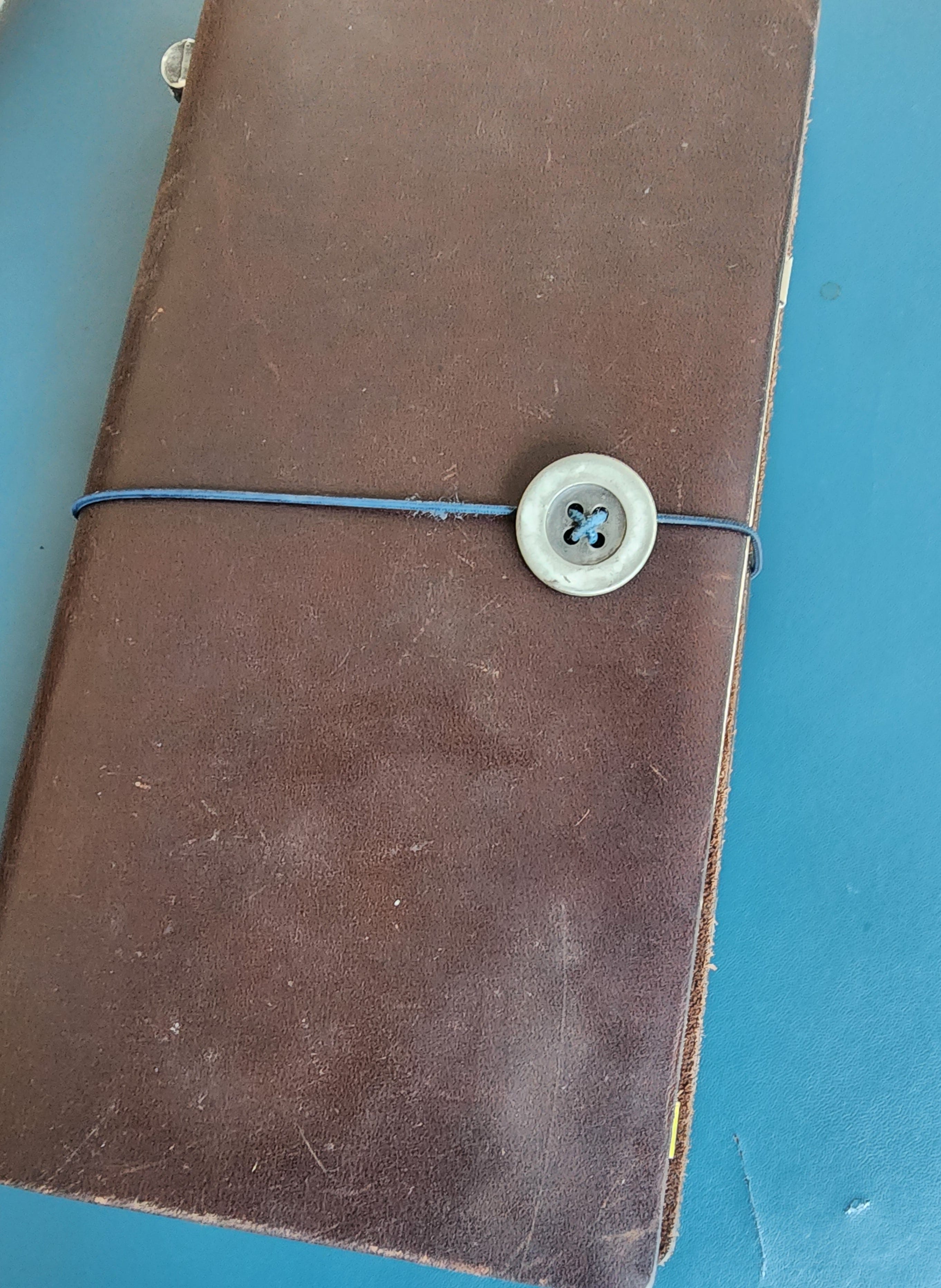
Traveler’s Notebook. Love it. Love it. Love it. And nope, I’m not getting paid for this. Although that would be cool because these little notebooks are not inexpensive, this one was a gift. Still, you can find great off-brand versions at stationery stores and on Amazon. The cool thing about this notebook style is that you can fill it with thin A5 slim notebooks that are held in the cover by elastic bands.
This simple little device lets me keep a calendar, development notebook, and writing journal in one place that I can easily grab and take with me. When I fill up one of the notebooks, I can replace it by removing it from the elastic band in the cover and adding a new one without having to discard the whole thing. I love its durability, the way it holds up and feels in my hand, and the way it looks, very old-timey writerly.
That’s what’s in the desk?
So, what’s in your desk—or on your desk? What do you like to have around when you write? Drop me a comment or note or shoot me a pic and I will include it in an upcoming newsletter. Let me know which tools of the trade you most like to use.
Notes on Publishing
Livestrong.com EIC Sarah Klein was a guest on the show a few weeks ago and she talked about how much she values collaboration with the freelancers she hires. When assigning a story she works hard to explain what she wants and communicate her expectations. She wants to hear from the writer too, about their vision for the piece.
These kinds of conversations with editors are invaluable and will save you time and heartache in the long run. Speaking of heartache, I share the time I got a Kill Fee. It isn’t fun.
Clear communication at the start of any assignment can help you avoid problems down the road. Ask questions of the editor, and get clear about keywords and messages they want to see. Understand the kind of structure the site wants and the editor prefers. Talk about sources and reporting, deadlines, and supporting details and elements.
“A writer asking those questions really shows me what kind of reporter you are,” Klein says. “I’d be impressed and really glad that they were investing the time in that communication.”
“Practicing an art, no matter how well or badly, is a way to make your soul grow, for heaven's sake. Sing in the shower. Dance to the radio. Tell stories. Write a poem to a friend, even a lousy poem. Do it as well as you possibly can. You will get an enormous reward. You will have created something."
—Kurt Vonnegut
Now, sit down and Simply Write.
-p